Share Sondra M. Cox's obituary with others.
Invite friends and family to read the obituary and add memories.
Stay updated
We'll notify you when service details or new memories are added.
You're now following this obituary
We'll email you when there are updates.
Select your format and elements to print

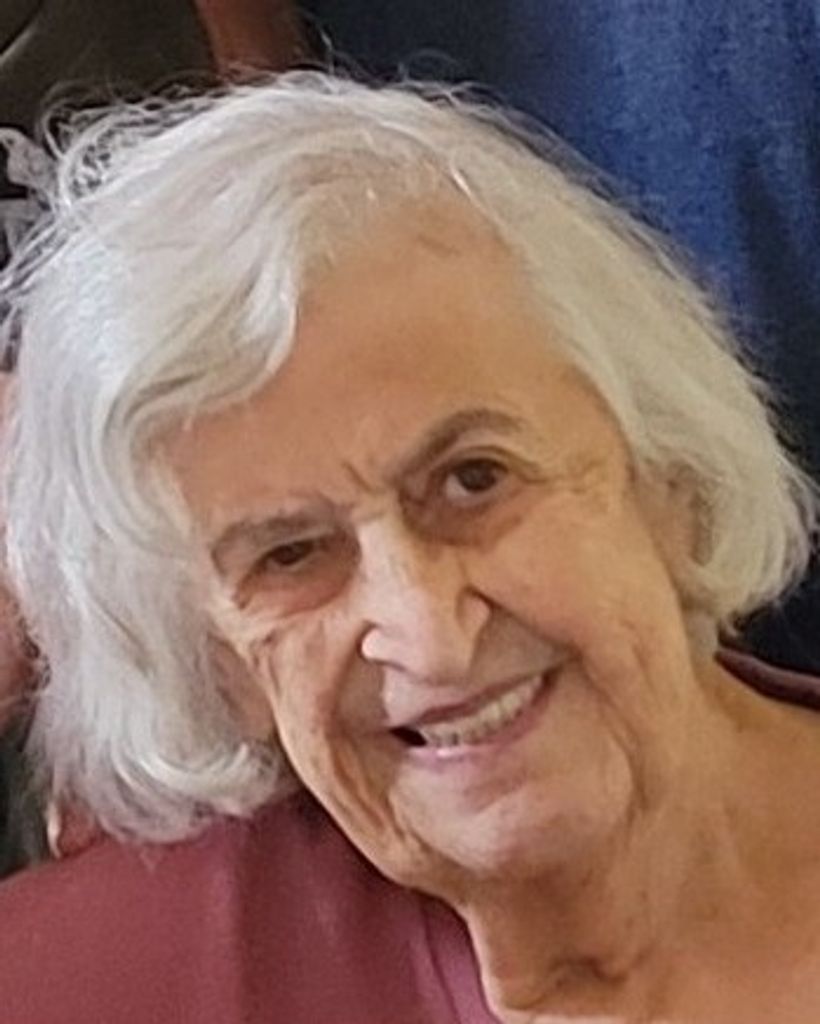


Sondra M. Cox
Jul 5, 1934 — Apr 20, 2026
Sondra Miriam Cox (1934-2026)
Sondra Miriam Cox (nee Hirsch) was much like Chicago, the city she made her
home for most of her life – caring, creative, eclectic, rooted in tradition but
never afraid to defy convention. Loved by family and friends both for her
intellect and her joyful approach to life, she was known to most as Sonny. It
was a nickname given with a nod to her typically cheerful disposition.
Her interests were numerous, diverse and a little idiosyncratic. Among them
were 19 th century literature, Italian opera, travel, the game of bridge, English
and Scottish history, and of course her hometown. She could speak with
authority, passion and deep knowledge on the life and works of Charles
Dickens, the vocal range of Jussi Björling, the intricacies of point count bidding
or the exquisiteness of a well-prepared martini. Above all, she cared about
family and education, often intertwining the two. In her personal life, she
instilled a lifelong love of learning in her four children, and in her professional
life, she brought new ways of thinking into the field of adult education.
Sondra Cox died in her home in Hyde Park, Chicago on the 20th of April 2026
from the effects of chronic obstructive pulmonary disease. She was 91.
Sondra made it her mission to make education accessible to everyone. Well
into her late 70s, after an accomplished career spearheading educational
projects and building professional networks in the Midwest, she would spend
countless hours providing detailed instruction and feedback for young students
who had written essays for the American School of Lansing Illinois.
Born in Chicago on the 5th of July 1934 to Maxwell and Dorothy Hirsch, she
grew up in the shadow of two of the defining events of the 20th century: the
Great Depression and the Second World War.
As a young girl, she may not have been fully aware of the historical significance
of all that was happening around her, but by the time she reached university,
she had developed a profound love of history, seeing in it a prism for
understanding the fast-changing world in which she and her family lived. She
was fond of telling her children, often during heated intellectual arguments, that
they needed to go back and learn their history.
Sondra believed in family and community. Her Jewish roots were important to
her, as was the sense of morality and fair play that she inherited from her
parents. Her father served as an attorney for the state of Illinois, and she often
spoke admiringly of his deep commitment to justice and honesty. Her mother
worked as a secretary for an executive at Sears Roebuck, and contributed to
the war effort, helping to prepare technical documents.
But Sondra also had a bohemian streak and was always prepared to go her
own way. She married first a poet and then a community theatre director,
ultimately raising her children as a single mother. Although she did not like to
apply the term “feminist” to herself, she was in some ways a pioneer of modern
feminism.
After graduating with a BA in Liberal Arts and Sciences from the University of
Illinois, Sondra married the poet Robert Sward and moved to Iowa, where
Sward joined the Iowa Writers’ Workshop. Her first child, Cheryl, was born
there in 1957.
The marriage did not last, and Sondra soon returned with Cheryl to Chicago at
the end of the 1950s. She moved to the neighborhood of Hyde Park, attracted
by its vibrant intellectual climate. This would become both a spiritual and literal
home for her for most of the next six decades.
Following her divorce from Sward, she married David Cox in 1960. Another
native Chicagoan, he had served in the Korean War and returned to his
hometown to act and direct plays in the local theatre community. They had
three children together, Daniel, born in 1960, Adam in 1964 and Jessica in
1970.
In the 1960s, Sondra worked as a secretary in the Philosophy Department at
the University of Chicago. There she met some of the brightest minds in
American academic circles – some of whom had won or would go on to win
Nobel Prizes and other major awards – and formed friendships that lasted a
lifetime.
In the next decade, Sondra embarked on a career in education, first working for
Porter County, Indiana where she raised funds and developed adult education
projects. She created a network of institutions across the state that changed
the provision of adult education services at a time when the workforce was
becoming increasingly diversified and gender balanced. She built on this work
during her time at Truman College, initiating citywide systemic changes.
Only late in life did Sondra speak much with her family about all she had done
for the Indiana and Illinois education systems. She had always been more
interested in the accomplishments of her children, two of whom attained PhDs,
one of whom directed a major award-winning documentary, and one of whom
fashioned a career in Hollywood before moving back to care for her in Chicago.
In her final years, she enjoyed travel, time with family and simple pleasures
such as coffee in the morning and a martini every evening at 5 pm as she
watched the news. She enjoyed traveling to visit Cheryl and granddaughter
Maxine, and Adam and grandsons Joshua and Asher. Determined to keep
learning at every opportunity, she would often ask her grandchildren about
whatever they were studying or reading, quizzing them on theories, authors or
concepts she had not heard about before.
Sondra is survived by all four children, Cheryl, Daniel, Adam and Jessica, and
by grandchildren Joshua Pemberton Cox, Asher Pemberton Cox and Maxine
Lily Ann Macpherson. Her second husband David died in 1996; her first
husband Robert died in 2022.
Guestbook
Visits: 18
This site is protected by reCAPTCHA and the
Google Privacy Policy and Terms of Service apply.
Service map data © OpenStreetMap contributors